Do Korean Pimple Patches Work? An Honest First-Timer Guide
How Korean hydrocolloid patches actually work, which pimples they fix, which they can't - from someone who's worn them for 8 years.
Which patch fixes which pimple, where to buy the real thing in the US, and how to use it so it works the first time.
Find your patch →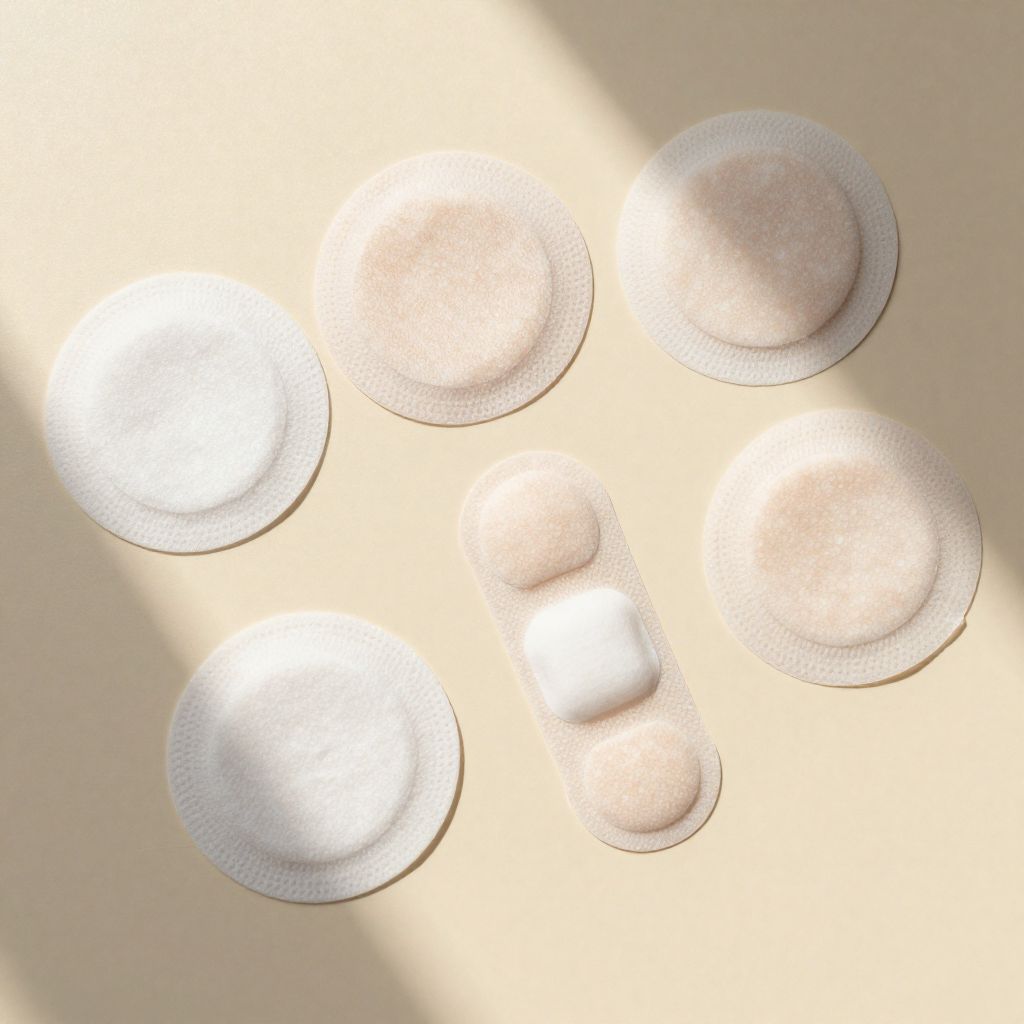
Acne pimple patches are small adhesive dots, usually made of hydrocolloid - a gel-forming material borrowed straight from hospital wound care. Stick one on a pimple and it quietly does three jobs at once: absorbs the fluid inside, keeps the spot protected while skin repairs itself, and makes it physically impossible to pick, which is the most underrated part.
I'm Rachel, and I've been wearing these since before they were an aesthetic. My aunt in Seoul used to mail them in care packages years before Target stocked them. This site is everything I've learned in eight years of testing patches: what works, what's marketing, and what I'd never put on my face again.
One thing you should know up front: patches are not magic, and anyone telling you they cure acne is selling something. They're a precise tool for a specific job. Used on the right pimple, they're the best two dollars a week you'll spend on your skin - and if you want the mechanics first, here's how patches work in detail.
Nearly every acne pimple patch on the US market falls into one of two camps.
Hydrocolloid patches are the classics: the little round dots that turn white overnight. They work by absorption: fluid leaves the pimple, gets trapped in the patch as gel, and the spot flattens. Decades of wound-care use back the material, and plain versions are gentle enough for almost any skin.
Microneedle patches are the newer, pricier category. Instead of absorbing, they deliver: microscopic dissolving tips carry ingredients under the skin's surface, built for those early, closed red bumps a normal patch can't reach. A 2023 study reported promising results on inflammatory spots, though the research field is still young.
There's a third, in-between group: hydrocolloid patches with added actives like salicylic acid, tea tree or centella. More potential help, more irritation risk. Sensitive skin does better without the extras. For the studies behind all this, see the full science comparison.
This is the decision that makes or breaks your patch experience, so here it is in plain terms.
A whitehead (a pimple that's come to a head with visible fluid) is the perfect patch target. Plain hydrocolloid, overnight, done. An early red bump with no head yet gives a classic patch nothing to absorb; that's microneedle territory, if your skin tolerates it. A deep, painful lump under the skin is beyond any sticker; that one deserves a dermatologist, not a shopping spree. And a blackhead contains no fluid at all, so a patch will sit there doing nothing.
If you remember one sentence from this whole site: match the patch to the pimple, not to the packaging.
A small pack of 18-24 patches runs around $4-6 at Ulta, Target or Walmart. That's pocket money for trying the category. The trap is stopping there. Bulk pouches of 90 to 240 patches, mostly sold online, drop the price per patch from roughly twenty cents to nearer a dime.
That per-patch number is the only price that matters. Two packs can sit side by side at the same sticker price while one costs you double per pimple. Prices move around constantly, so treat any number, including these, as a ballpark and do the ten-second division before checkout. When you're ready to shop, here are my tested picks with the price-per-patch math.
After eight years in patch-land, almost every horror story I hear traces back to one of two mistakes.
Wrong technique. Patches go on clean, completely dry, product-free skin, and stay on for 6-8 hours. Applied over moisturizer, peeled off hourly to check, or stuck on a pimple they can't help, they "don't work" and get blamed.
Wrong seller. Counterfeit Korean patches are a genuine cottage industry, and popular brands are the favorite targets. I've bought one myself: perfect product photos, wrong adhesive, chemical smell. Buy from official brand storefronts and major retailers, be suspicious of prices dramatically below everyone else's, and check that batch codes exist.
Both problems are completely avoidable, which is why the full application and anti-fake guide is the most important page on this site.
Yes, on fluid-filled whiteheads, reliably. Elsewhere, it depends on the type, and sometimes the answer is simply no.
Plain hydrocolloid is among the gentlest things in skincare. Added acids and oils raise irritation odds; sensitive skin should stay plain. Anything that itches or burns comes off.
Daytime formats exist precisely for this: thin, matte, near-invisible. Some people wear them openly; pimple positivity is a real thing now.
A plain hydrocolloid pack from a store you already trust, applied correctly on the next whitehead that shows up. The guides below take it from there.
The K-beauty originals: how they work, which ones earn their price in the US, how to use them right - and how to spot the fakes that flood the marketplaces. This is the deepest guide series on the site. Browse the whole category →
How Korean hydrocolloid patches actually work, which pimples they fix, which they can't - from someone who's worn them for 8 years.
COSRX, Some By Mi, MEDIHEAL and more, compared by pimple type, skin sensitivity and price per patch - with verified US retailers.
Step-by-step application, the pop-or-not answer, mistakes that cause irritation, and 5 ways to catch a counterfeit patch before it ships.
The science behind classic and microneedle acne patches: how each works, what studies found, and when the upgrade is worth your money.
Wearing a patch to work, school, or a video call: what people actually notice, how to make makeup hold over it, and which patches genuinely disappear under office light. Browse the whole category →
The right order for patch and makeup, which concealer actually works, and three mistakes that made mine slide off by noon.
Which 'invisible' pimple patches actually disappear under office light and on camera - tested by scenario, not just by the label.
Will people notice a pimple patch on a video call, at an interview, or in class? A realistic, situation‑by‑situation answer - no empty reassurances.
Every guide here starts with research, not with a product someone paid us to like. Before writing, we map what real people ask about patches, from "do they work" to "is this COSRX pack fake," and build each article to answer one of those questions completely.
The facts come from published studies (linked or named in the text), US retailer listings, FDA guidance on how cosmetics are regulated, and years of personal testing. Where the evidence is thin, and in the patch world it often is, we say so instead of rounding up to "clinically proven." Prices are checked at writing time and labeled as ballparks, because they change weekly.
What we don't do: miracle claims, medical advice, or recommendations for products we haven't handled. Articles are reviewed for accuracy by Dana Whitfield, a licensed esthetician with 12 years of practice in problem skin.
This site is reader-funded curiosity for now; if that ever changes, affiliate links will be labeled where they appear.

Rachel Kim grew up between Seattle and her aunt's Seoul care packages, which is how Korean pimple patches reached her bathroom a decade before they reached Target. Three years behind a beauty-retail counter and thirty-plus tested patch products later, she writes the guides she wishes had existed when she was sixteen and picking at her chin. - Rachel
Mostly. Hydrocolloid is the material inside the classic patch. But the category now includes microneedle and actives-infused patches that work differently, which is why "which type" matters more than "which brand".
Patches are widely regarded as a safe, gentle spot tool, mainly because they stop picking. They're not a treatment for acne as a condition; persistent breakouts belong with a professional.
Korea invented and perfected the category, the value per patch is usually better, and the US market is now full of both genuine Korean products and fakes of them. Somebody had to sort that out.